
Increased Risk Campaign
Driving home can feel routine. But RSA research shows the hours between 4pm and 8pm are among the highest risk times to be on the road, as many of us may be tired, rushing, or distracted. It’s also a time of increased interactions between road users, including, pedestrians, cyclists, motorcyclists.
Our RSA data tells us that the roads are most dangerous between 4–8pm. The High-Risk campaign focuses on this daily window when traffic increases, people are potentially tired or distracted, and the chance of a serious collision is higher.
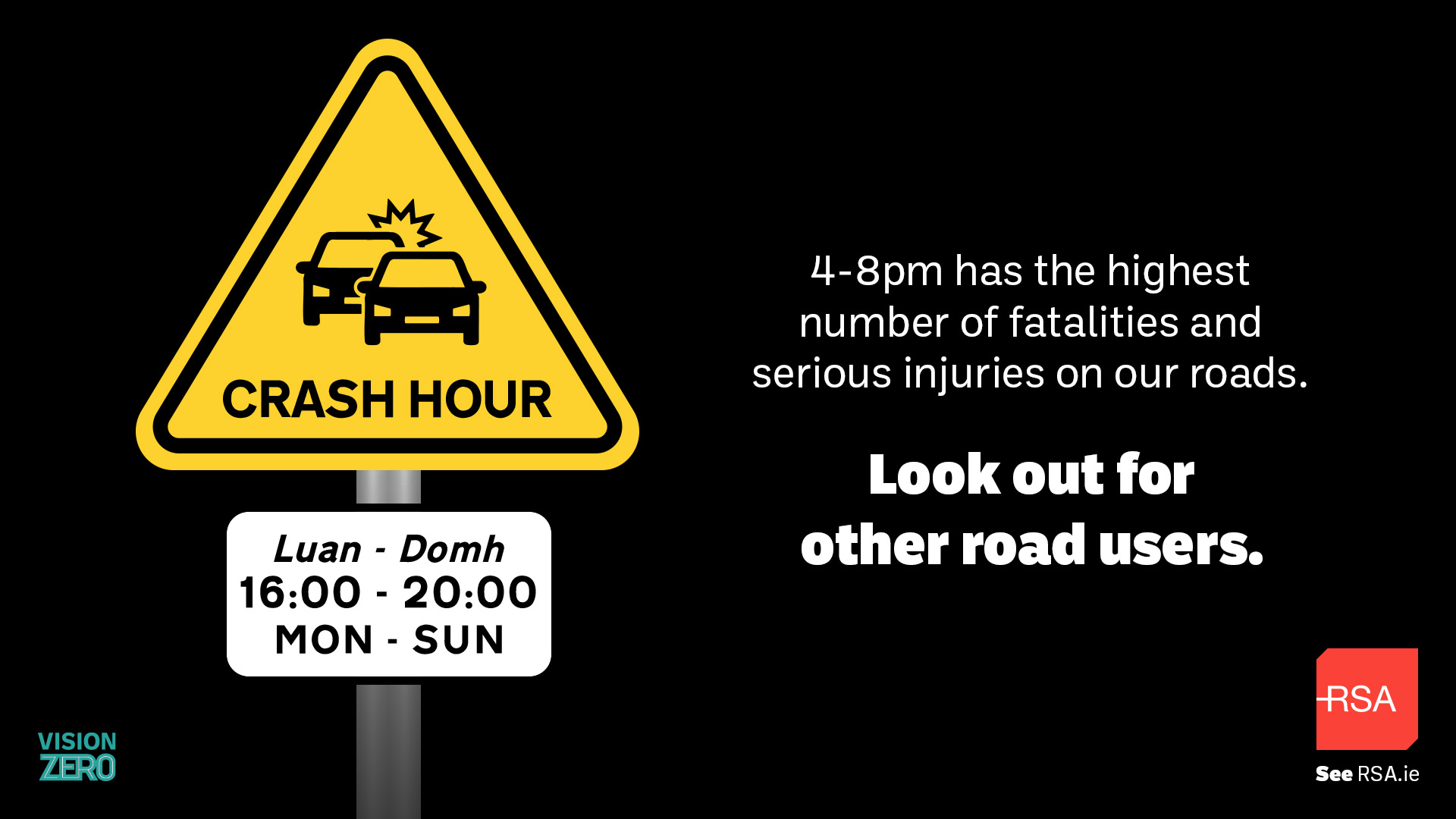
Creatively, the campaign uses a clear, memorable reframing of something we all recognise. “Rush Hour” becomes “Crash Hour”. A friendly but direct reminder that the evening commute is a time when it’s especially important to stay alert behind the wheel, on a bike, an e-scooter or as a pedestrian.
To help this message land (and stick), the idea is designed to show up when people need it most. You’ll see and hear reminders in the places people already engage during their commute, like radio, outdoor and various digital/social channels. The aim of the campaign is to build a simple habit: during the hours of 4–8pm, we should all take an extra moment to slow down, stay alert, and make safer choices.
Why 4pm–8pm matters
RSA research shows a clear pattern: serious and fatal collisions are disproportionately concentrated in the late afternoon and early evening commute.
- 49 fatalities occurred between 4pm–8pm. That’s 27% of fatalities where time was known (49 out of 184). Provisional Review of Fatalities, 1 January to 31 December 2025
- 16% of serious driver injuries occurred between 4pm and 6pm; nearly 50% occurred between 12pm and 8pm. Driver spotlight report: fatalities and serious injuries 2019-2023
- Almost a quarter (41, 24%) of all fatalities in 2024 occurred between 4pm and 8pm. Provisional Review of Fatalities 1 January to 31 December 2024
The message
Don’t drive on autopilot during 4pm–8pm. Small changes during this time can have a life-saving impact, for you and other road users.
- Slow down: Even a small reduction in speed gives you more time to react and can reduce the severity of a collision.
- Put distractions away: No calls. No scrolling. No “quick look”. Your attention is one of your most important safety features.
- Be extra vigilant: Expect the unexpected: a pedestrian stepping out, a cyclist in your blind spot, a motorcyclist weaving through the traffic, a child near a crossing, or a slow-moving vehicle.
- No headphones: you will need to list for other road users.
- Be seen: at lighting up times do what you an to help other road users see you.
During 4pm–8pm, take an extra second to:
- Scan footpaths and crossings early and often.
- Check mirrors and blind spots before turning or changing lanes.
- Leave safe passing space and don’t crowd cyclists.
- Adjust for low sun and changing light as the daylight fades.
- Don’t speed
/270x201.jpg?sfvrsn=8a9376f2_1)


/drink-driving-ooh-select-1.jpg?sfvrsn=50c99bd8_1)

/rsa-speeding-web-banners-384x207.jpg?sfvrsn=60a6a2d2_3)